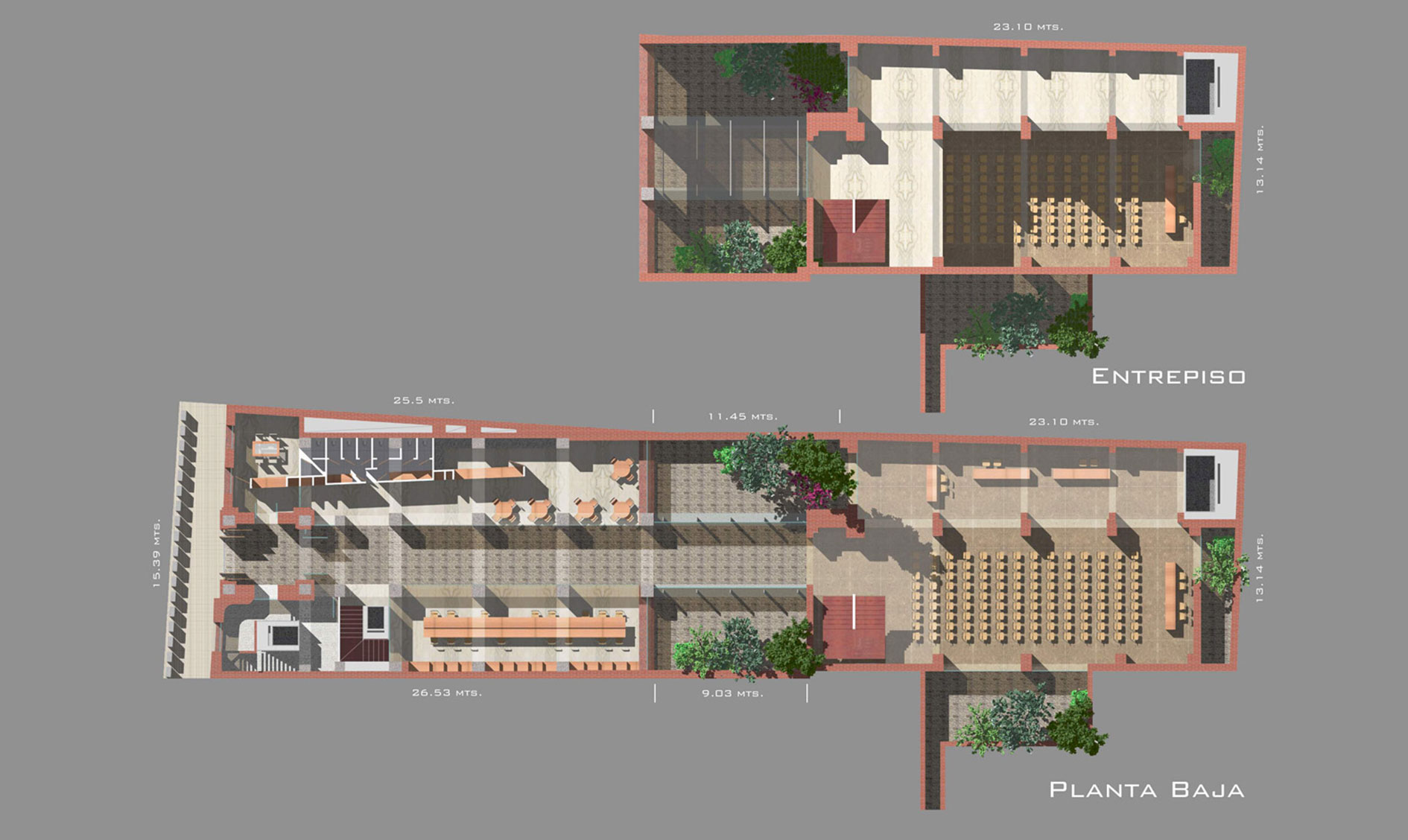
The functional concept is organized around a central axis that runs through the three sectors of the complex:
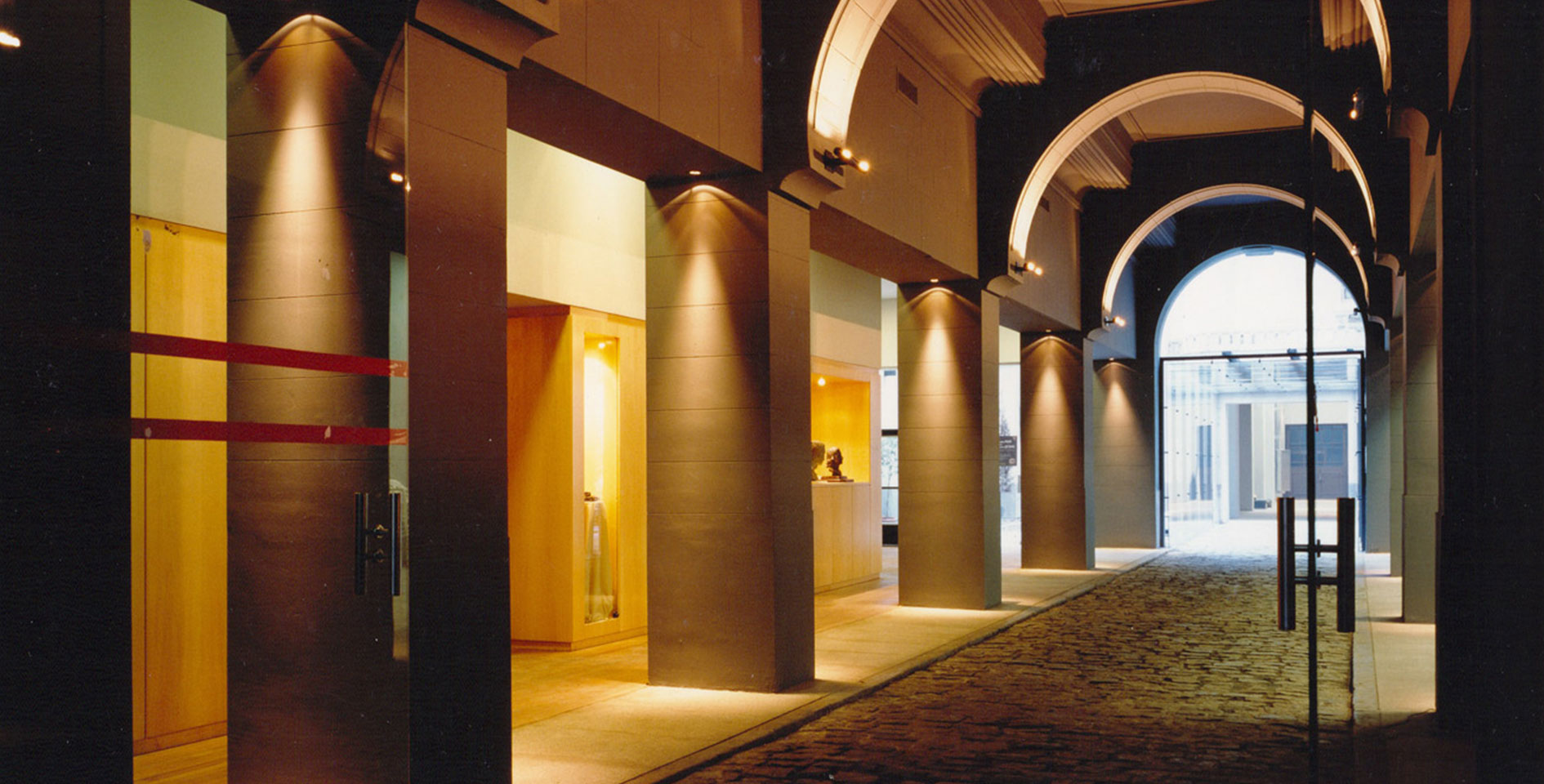
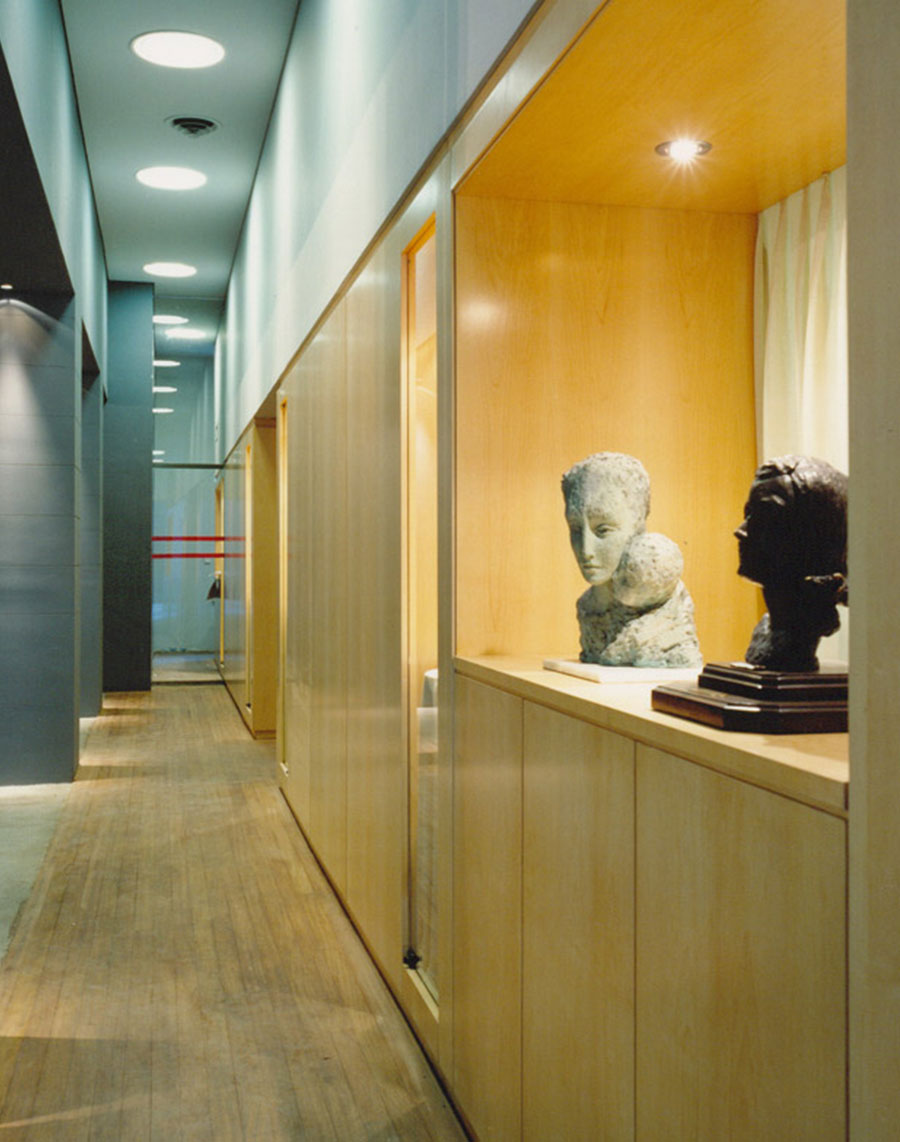
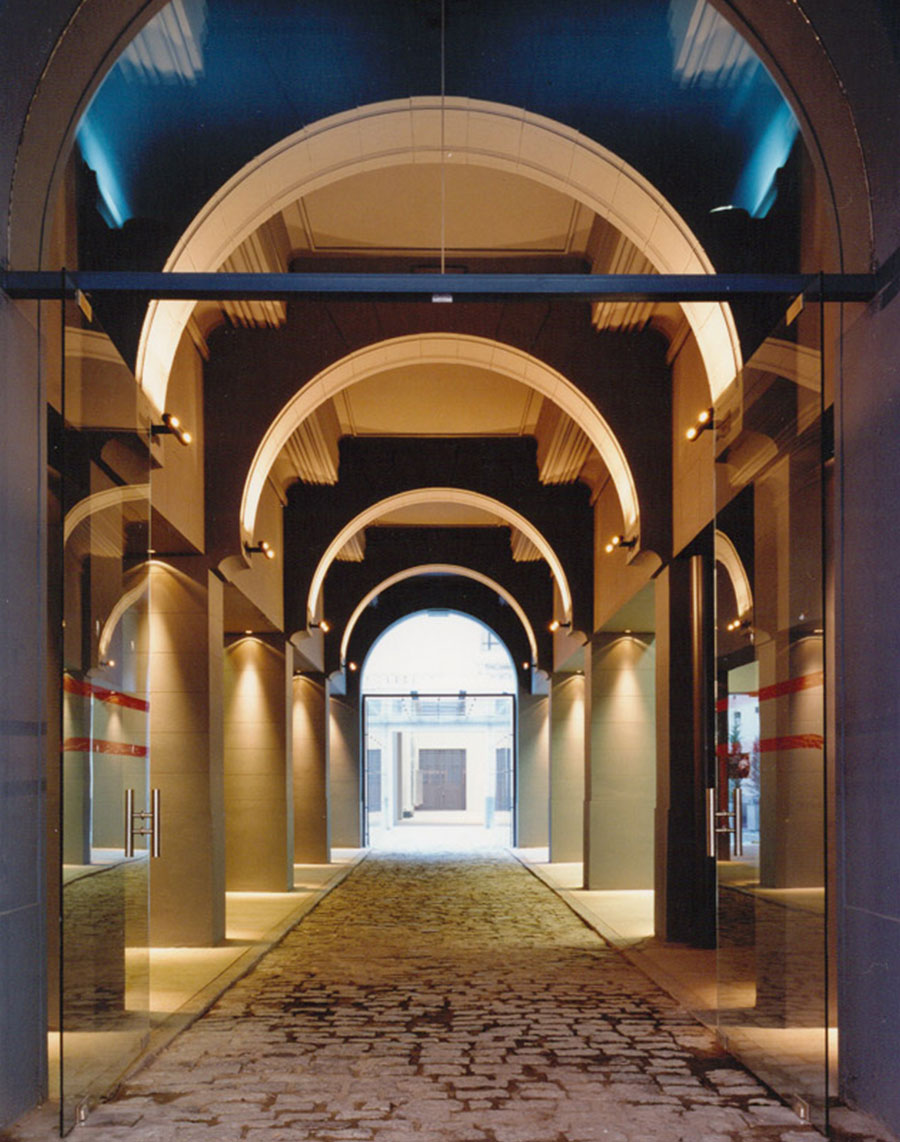
1. Central cobblestone axis: It runs through the main building, spatially connected through arcades that visually link the entire floor. A timber plane parallel to the circulation spine accommodates the restrooms and the café. The connection to the central courtyard is fully open through large glazed openings.
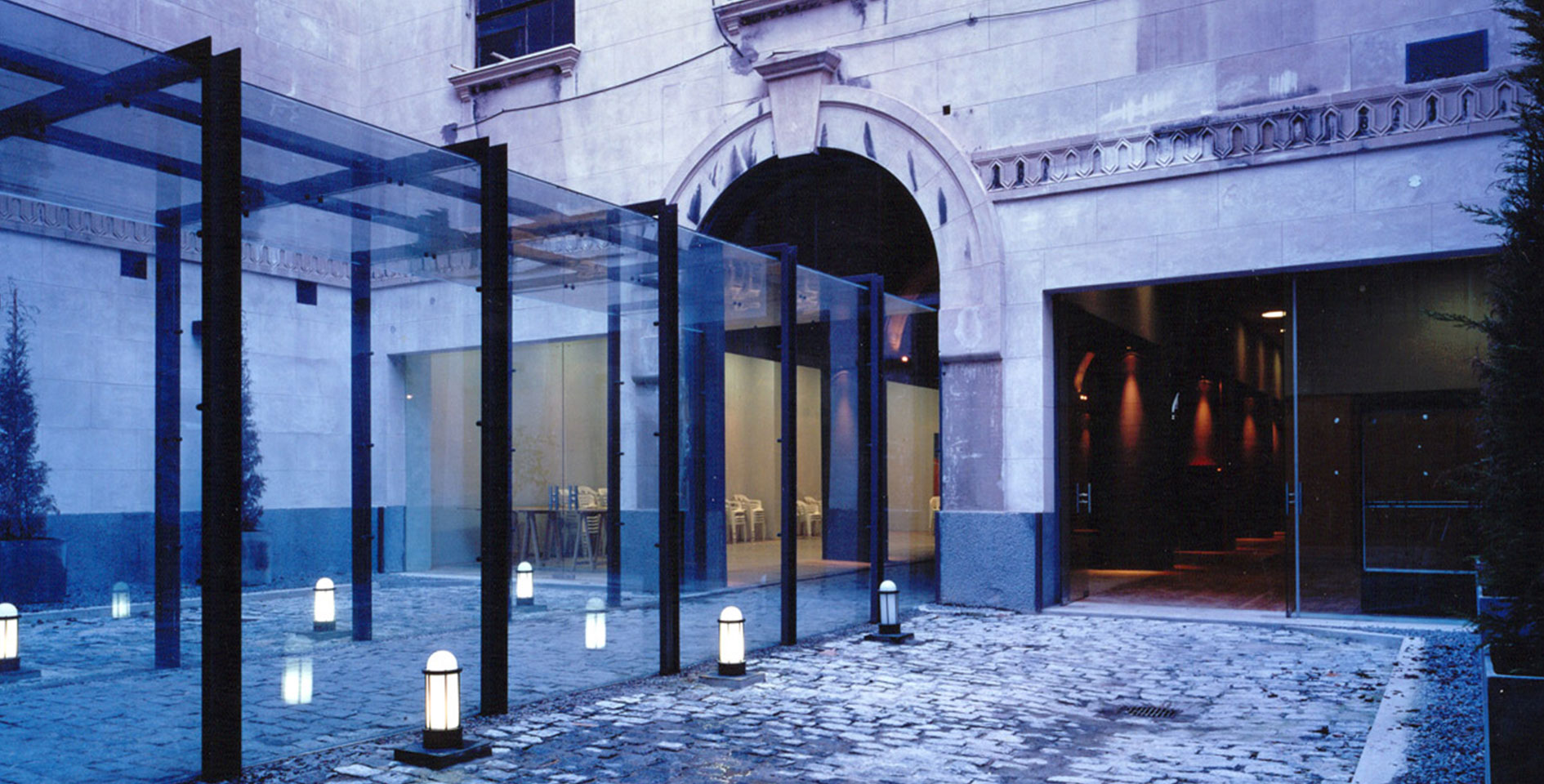
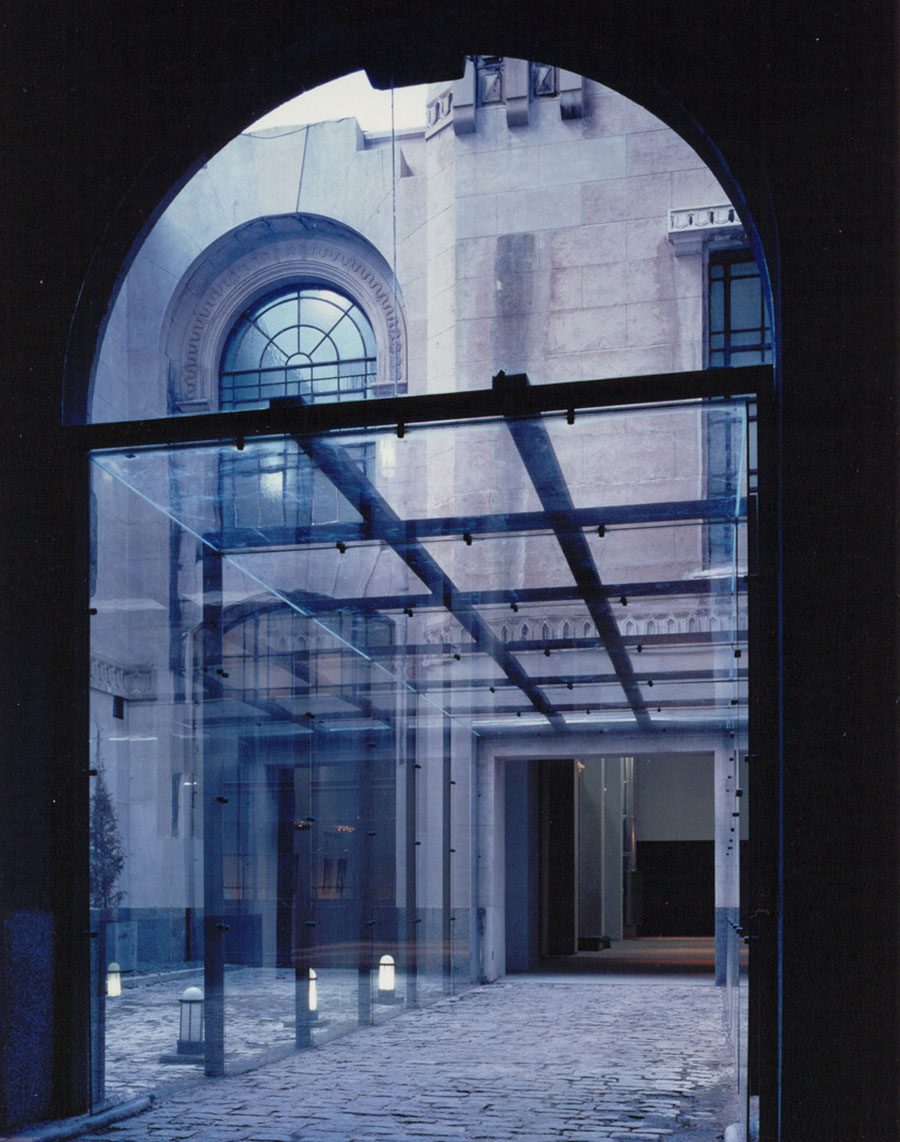
2. Central courtyard: It was treated as an open-air space, preserving its historic character. A glazed connector, with a metal-profile structure, defines the circulation between the two existing buildings. The courtyard was designed as a cobblestone surface, strongly defined by the presence of the existing façades, refurbished and finished in Paris stone.
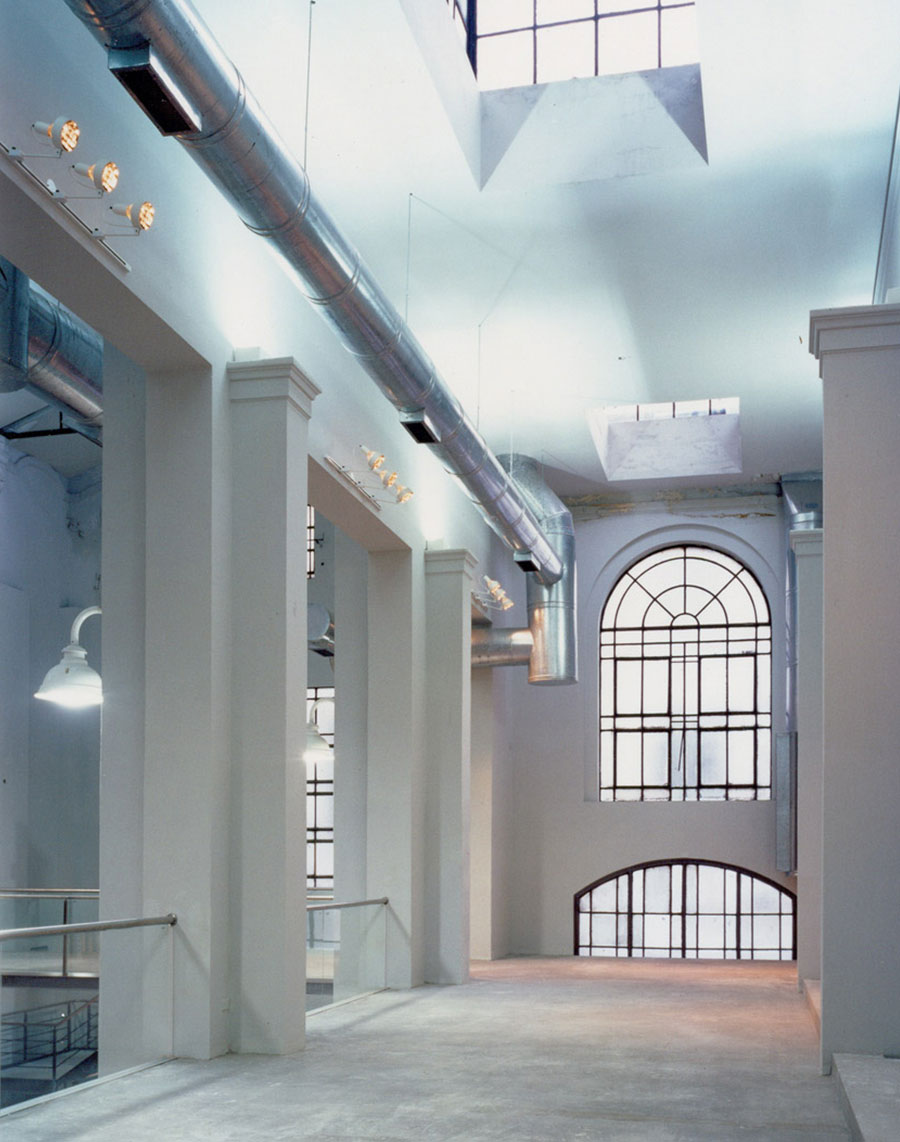
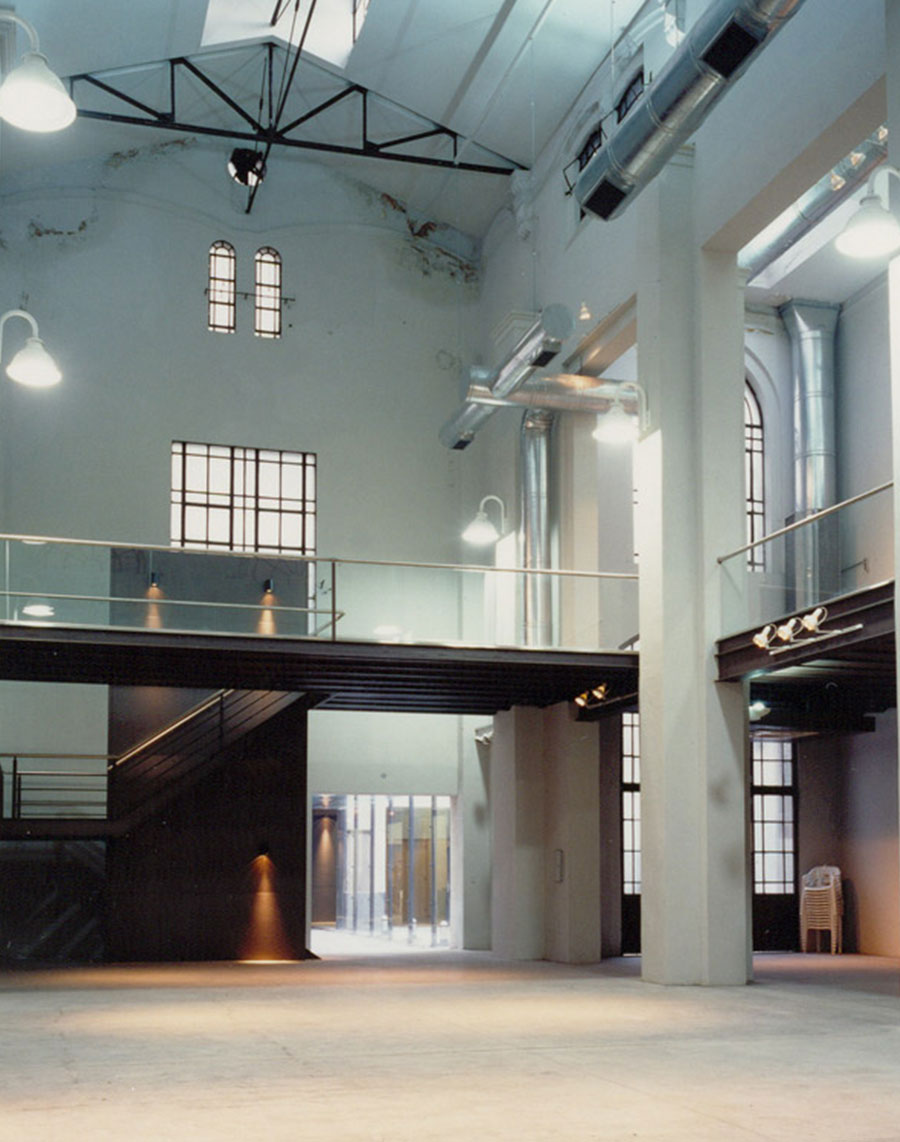
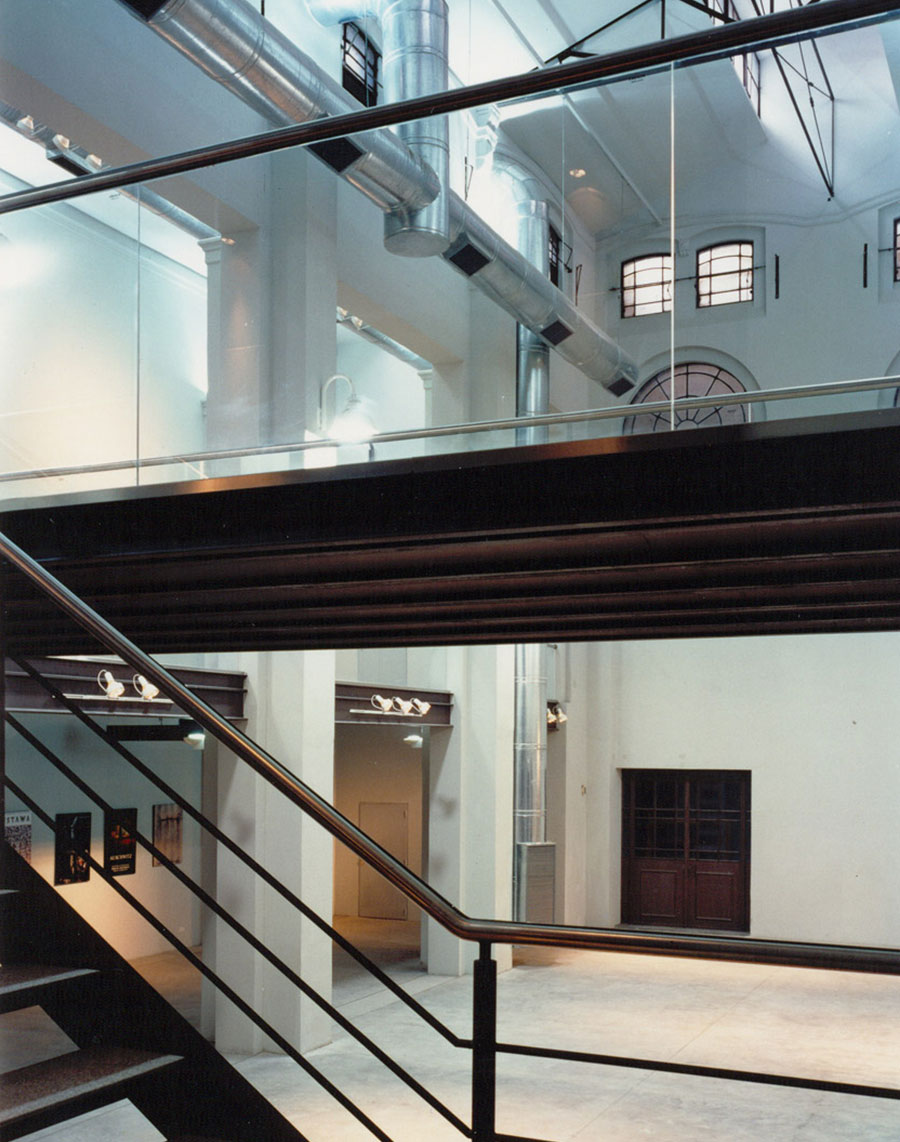
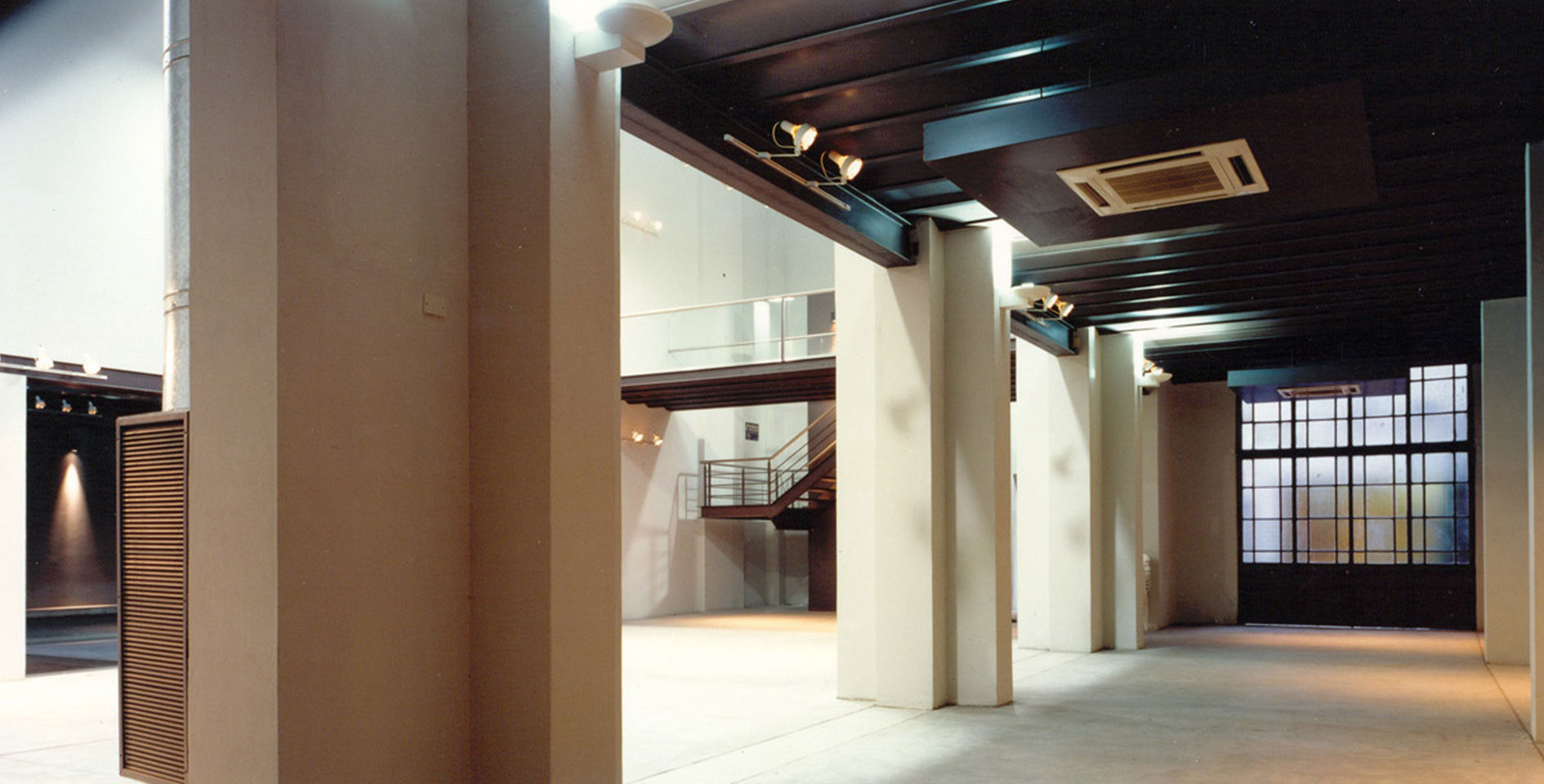
3. Rear building: A large, highly flexible open plan, with two areas defined by height: one is the main hall, 15 meters high, with a strong spatial presence and a roof structure of steel trusses; the other lies beneath the steel mezzanine, built with a continuous corrugated metal vault. This mezzanine overlooks the main hall.
In addition, connected to this space, a meditation room was designed with great austerity, featuring a flamed granite floor and a concrete bench.
The aesthetic concept was based on revaluing the building’s authentic existing architecture, while incorporating new functional elements treated as design pieces with strong significance.